Description
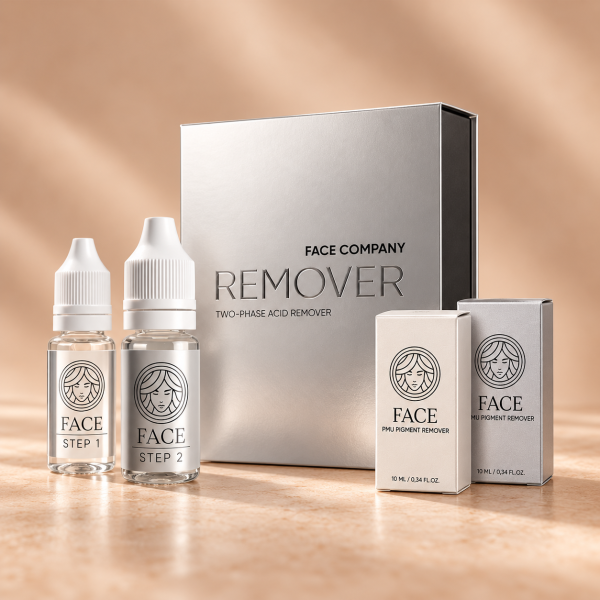
Two-Phase Acid-Based Remover for Permanent Makeup
The perfect balance between effectiveness and gentle care.
The glycolic acid formula provides gentle yet effective treatment for unwanted pigmentation while reducing the risk of scarring.
Contraindications
- Absolute contraindications are the same as those for permanent makeup and other cosmetic procedures.
- A diagnosis of hypertension is an absolute contraindication.
- Temporarily elevated blood pressure is also a contraindication at the time of the procedure.
- A history of multiple allergic reactions must also be taken into consideration.
- Attention must be paid to any existing inflammation in the client’s body.
- If the client feels unwell, has a fever, the flu or a cold, the procedure must be postponed until they have fully recovered and feel well again.
Understanding Removers: What You Are Working With and How to Use Them
The FACE remover is a two-phase system.
The first phase contains glycolic acid and lactic acid.
Lactic acid, also known as alpha-hydroxypropionic acid, is derived from milk whey.
The second phase is a mildly alkaline solution containing added salt. It neutralises the effects of the first phase and helps accelerate renewal processes through an osmotic effect.
Let us look at the pH levels of our removers so that you can work confidently and understand that these removers are completely safe.
The first phase has a pH of 4.
The second phase is mildly alkaline, with a pH of approximately 9–10.
Working with the Remover
First Phase
I pick up the first-phase solution with the needle.
During the procedure, I do not wipe the solution off. If necessary, I gently blot it with a dry cotton pad.
I work in one-centimetre sections with 50% overlap. The characteristic “zik” sound must be audible.
I gently stretch the skin by hand. The skin must remain taut.
I work using linear strokes, with a stroke length of no more than one centimetre.
Second Phase
I apply the second-phase solution over the entire eyebrow.
After leaving it to act for a while, I remove the remaining solution and exudate (tissue fluid) with a slightly damp cotton pad.
The pigment will gradually lighten over the following two months.
Aftercare
Avoid wetting the treated area during the first 24 hours.
Treat the area with FACE chlorhexidine wipes every two hours, preferably every hour if possible.
Flaking will occur. Do not peel, scratch or pick at the flakes or scabs.
Avoid saunas, steam baths and tanning beds for two weeks.
Once the skin begins to flake, I recommend applying a thin layer of FACE regenerating gel to moisturise the skin.
After the first week of healing, once the scabs have fallen off, the use of Lioton ointment is recommended for approximately one month to accelerate regeneration and achieve the best possible treatment result.
Final Advice
First, make sure your hand position is correct and your technique is well established.
Do not rush your strokes. Work step by step, section by section.
As you have seen during the demonstration, there is nothing complicated about the procedure.
The key is to follow every detail carefully.

Reviews
There are no reviews yet.